
About Us
Global Medical & Laboratory Equipment Portal (GMLE) is a planned international information portal for organizations that select, manufacture, distribute, install, and maintain medical and laboratory equipment. It is intended for hospital equipment teams, clinical laboratories, research facilities, distributors, device manufacturers, biomedical engineers, service providers, and procurement specialists. GMLE will help these professionals compare equipment in the context of the work it must perform, the facilities in which it will operate, and the resources required to keep it reliable throughout its service life.
The portal will cover medical imaging equipment, laboratory centrifuges, autoclaves, ultrasound systems, dental equipment, biochemical analyzers, and related accessories and support systems. Its reporting will connect product specifications with clinical or laboratory workflows. Image resolution matters alongside examination time, operator controls, data handling, and maintenance access. A centrifuge’s maximum speed matters alongside rotor compatibility, sample capacity, temperature control, balancing, and containment. An autoclave’s chamber size matters alongside load configuration, cycle validation, documentation, utilities, and turnaround time. GMLE will make these relationships clear so readers can judge practical suitability.
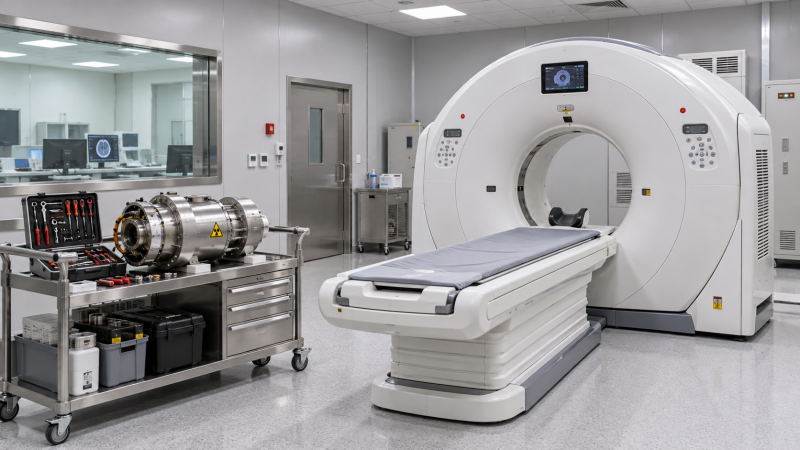
Medical imaging coverage will examine equipment configurations, image quality, acquisition speed, patient positioning, radiation-related features where applicable, software functions, storage requirements, and integration with existing systems. Reports will distinguish measurable specifications from workflow benefits claimed by a manufacturer. They will also consider room requirements, installation conditions, staff training, preventive maintenance, and service response. Because performance can depend on protocols, software versions, accessories, and the intended examination, GMLE will avoid presenting a single performance figure as a complete account of an imaging system’s capabilities.
Ultrasound reporting will address transducers, imaging modes, depth and resolution tradeoffs, portability, user controls, disinfection requirements, and connectivity. Dental equipment coverage will include imaging devices, treatment units, sterilization equipment, instruments, compressors, suction systems, and related technologies. Rather than treating a feature list as proof of clinical value, GMLE will examine how a configuration fits a particular department, procedure, staffing model, and maintenance environment. Product information will remain focused on equipment selection and operation; it will not provide patient-specific diagnostic or treatment advice.
For laboratories, GMLE will examine how instrument choices affect sample flow, analytical capacity, turnaround time, quality control, and staffing. Centrifuge coverage will consider relative centrifugal force, rotor types, tube compatibility, sample volume, temperature stability, imbalance detection, and service requirements. Biochemical analyzer coverage will compare test menus, throughput under stated conditions, reagent handling, calibration schedules, quality-control processes, consumables, connectivity, and downtime. Published maximum throughput will be identified separately from performance in a laboratory’s actual test mix and operating schedule.
Sterilization and reprocessing will receive careful treatment. Autoclave reports will address chamber dimensions, load types, cycle programs, monitoring, record keeping, water and steam requirements, preventive maintenance, and validation procedures. GMLE will explain that a successful cycle depends on the equipment, the load, packaging, preparation, and a validated process. Where a product claim refers to a particular standard or test, the portal will identify the applicable scope and edition when available. It will not imply that an equipment specification alone confirms the effectiveness of every sterilization process.
GMLE will follow the complete equipment life cycle. Before purchase, readers may need to assess intended use, capacity, room layout, electrical supply, water quality, ventilation, consumable availability, software compatibility, and installation cost. During procurement, they may compare manufacturer documentation, accessories, warranty terms, training, local service coverage, calibration support, and replacement-part availability. After installation, the priorities shift to commissioning, performance checks, routine maintenance, quality assurance, repairs, software changes, and eventual replacement. Reporting across these stages will help teams account for costs and responsibilities beyond the purchase price.
Interoperability will be evaluated in practical terms. A device may support a data standard yet still require configuration, compatible software, licensing, network security review, or interface testing before it works within a hospital or laboratory system. GMLE will examine relevant interfaces, data formats, device connectivity, software versions, and implementation requirements without assuming that stated compatibility guarantees a successful installation. It will also consider how equipment data supports image management, laboratory information systems, maintenance records, and traceability where these functions apply.
Regulatory status and intended use will be reported by model and market. A device offered in one country may have a different authorized use, configuration, classification, or commercial status elsewhere. GMLE will identify the jurisdiction, model, manufacturer, stated intended use, and date of the available evidence. It will distinguish a manufacturer’s announcement from a documented authorization or market clearance and will avoid assuming that approval of one model extends to an entire product family. Readers will be directed to current official records and manufacturer documentation when a purchasing decision depends on regulatory status.
Manufacturing and supply are also important to equipment buyers. GMLE will cover production capacity, component selection, quality processes, testing, calibration, software management, packaging, distribution, and service infrastructure. For procurement teams, a technically capable device may still be a poor fit if consumables are difficult to obtain, local technicians lack training, software support is uncertain, or repairs require long periods of downtime. Reports will therefore consider supplier capability and continuity alongside the equipment’s published specifications.
GMLE’s intended value is disciplined comparison. It will present the conditions behind performance figures, identify gaps in available evidence, and explain how equipment requirements change across hospitals, diagnostic laboratories, research facilities, dental practices, and regional markets. By connecting technical information with workflow, validation, regulatory status, maintenance, interoperability, and lifetime cost, the portal aims to support more confident equipment selection and responsible long-term management.
Get in Touch
Have a question or feedback? We'd love to hear from you.
Leave A Message
If you are interested in our products and want to know more details, please leave a message here, we will reply you as soon as we can.