
Autoclave Validation: What Biological and Chemical Indicators Can Prove


A load finishes its steam cycle, the indicator tape changes color, and the biological indicator later reports no growth. Can the load be released? Not from those results alone. Biological indicators provide evidence of microbial inactivation at the challenge location; chemical indicators show exposure to specified process conditions. Neither proves that every item in the load is sterile.
For autoclaves, a defensible release decision combines a validated process, acceptable physical cycle records, appropriate indicator results, and conformity with the approved loading and packaging procedures. A passing indicator cannot override a cycle alarm, an unsuitable load configuration, or compromised packaging. Understanding these boundaries helps prevent both unsafe release and unnecessary rejection of usable loads.
Three evidence streams, three different questions
Sterilization monitoring becomes easier to interpret when each measurement has a defined role. A chamber temperature record, a chemical indicator inside a package, and a biological indicator in a process challenge device do not measure the same thing.
These sources support one another but are not interchangeable. A load with a satisfactory biological result and an unexplained exposure-temperature failure still requires investigation. Similarly, acceptable chamber records do not excuse a failed internal chemical indicator.
Biological indicators: direct microbial evidence with defined boundaries
A biological indicator, or BI, contains a characterized population of resistant microorganisms. For moist-heat sterilization, Geobacillus stearothermophilus spores are commonly used. The indicator must be suitable for the steam process, exposure conditions, and intended challenge configuration; choosing a BI simply because it is labeled for sterilization is insufficient.
After processing, the BI is incubated or analyzed using its specified system. A valid negative result means that the system detected no surviving challenge organisms under its prescribed conditions. That conclusion depends on correct storage, handling, activation where applicable, incubation, and reading. Rapid-readout systems must be interpreted according to their validated instructions rather than assumed equivalent to an arbitrary shortened incubation.
A negative BI does not establish a sterility assurance level by itself. Sterility assurance is supported by process development and validation, including the relationship among microbial resistance, delivered lethality, and the selected validation approach. One negative indicator cannot demonstrate a particular probability of a nonsterile unit across an otherwise unvalidated load.
The control is part of the result
An unprocessed positive control demonstrates that the indicator organisms and detection system can produce the expected positive response. Use the control selection, frequency, and incubation conditions required by the BI manufacturer and applicable procedure. A control that fails to respond as expected undermines interpretation of the associated negative results; it does not make the sterilization cycle more convincing.
Record the BI lot, expiry, location, cycle identification, reader or incubator identification, and result. Without that traceability, a passing readout may be impossible to connect reliably to the load being assessed.
Chemical indicators: choose the function, not the color
Chemical indicators, or CIs, react to one or more process variables. Their endpoints must be assessed against the manufacturer's acceptance criteria. A faint change, uneven response, or color different from the specified endpoint should not be accepted merely because the indicator “looks processed.”
The ISO 11140 series distinguishes indicator types by intended function. These types are not a simple ranking from weak to strong, and a higher type number does not make an indicator suitable for every cycle.
- Type 1 process indicators, such as many external tapes, distinguish processed from unprocessed items. They do not confirm adequate conditions inside the package.
- Type 2 indicators are intended for specific tests, including air-removal testing where applicable.
- Types 3 and 4 respond to a single critical variable or multiple critical variables, respectively, within their specified performance characteristics.
- Type 5 integrating indicators respond to all critical process variables within specified ranges, with performance requirements linked to biological-indicator performance requirements.
- Type 6 emulating indicators respond to all critical process variables for specified sterilization cycles. They must match the cycle being evaluated.
A Type 5 indicator remains a chemical measurement, not a microbial survival test. A Type 6 indicator intended for one exposure specification should not be reassigned to another because both cycles use steam. Confirm compatibility with the actual cycle and follow the indicator's instructions for placement and interpretation.
Placement determines what the result can tell you
An indicator placed where steam reaches easily may pass while a difficult location receives inadequate exposure. Validation must identify representative challenging locations rather than assume that a convenient chamber position is meaningful.
Challenges differ by load. Dense wrapped sets can hinder air removal and steam penetration. Lumened devices present geometry-dependent challenges. Liquid loads heat differently from porous goods, and the chamber reaching its setpoint does not establish that the liquid's coldest location has completed the required exposure. Procedures should address these load families separately.

A process challenge device, or PCD, creates a defined challenge to the sterilization process. Its value depends on documented suitability for the application, including its relationship to the actual load. A generic test pack cannot automatically represent every hollow device, wrapped tray, or laboratory container.
Qualification may require calibrated temperature sensors within representative loads, together with biological challenges where appropriate. Routine monitoring should then use the placements and challenge systems established by the validated procedure. Adding an indicator at a more accessible location does not justify removing the established challenge.
Validation is broader than routine monitoring
Validation establishes documented evidence that the process consistently meets predefined requirements. Routine monitoring checks whether an individual cycle remains within that established process. Passing routine indicators cannot compensate for missing qualification or an unassessed change in load design.
The ISO 17665 framework addresses development, validation, and routine control of moist-heat sterilization processes for medical devices. The ISO 11138 series addresses biological indicators, while ISO 11140 addresses chemical indicators. Healthcare facilities may also use ANSI/AAMI ST79 or other applicable national guidance. These documents have different scopes; their applicability depends on the setting, jurisdiction, process, and current adopted edition.
Laboratory waste decontamination should not automatically inherit medical-device release criteria. Its validation must address the intended decontamination objective, waste composition, containers, and applicable biosafety requirements.
A practical qualification program connects the following activities:
- Installation qualification: confirm installation, utilities, instrumentation, documentation, and calibration status.
- Operational qualification: establish that the equipment operates within specified limits, including relevant controls, alarms, and air-removal performance.
- Performance qualification: demonstrate acceptable performance with defined loads, packaging, loading patterns, and challenging conditions.
The approved process should define acceptance criteria before testing begins. It should also identify permitted load variations, routine monitoring frequency, release responsibilities, and conditions requiring requalification. Changes to packaging, container size, load density, cycle programming, steam supply, or major equipment components need documented assessment rather than automatic acceptance.
Reading conflicting results without explaining them away
Conflicting evidence is a reason to hold affected material and investigate, not to select whichever result is most reassuring. Define the response in a written procedure so that release pressure does not determine the interpretation.
Chemical indicator passes, biological indicator is positive
A passing CI does not override a positive BI. Quarantine the affected load and apply the established escalation procedure. Assess cycle records, loading, indicator placement, steam delivery, and possible test-system or handling problems. A positive result requires investigation, but it does not identify the root cause on its own.
Review BI storage, expiry, activation, incubation, control behavior, and handling. Do not attribute the result to contamination without evidence. Repeating the cycle or obtaining a later negative BI does not erase the original result or establish the disposition of previously processed items.
Biological indicator is negative, but another acceptance criterion fails
A negative BI cannot cancel a failed internal CI, aborted cycle, unexplained alarm, or unacceptable physical record. Investigate the discrepancy and resolve all required release criteria. An indicator may have experienced acceptable conditions even though another location or process requirement did not.
Wet or damaged packaging creates a separate problem: microbial lethality during exposure and maintenance of sterility afterward are different questions. A passing BI does not restore the protective function of compromised packaging.
Air-removal test fails before production
A Bowie-Dick-type test assesses air removal and steam penetration in applicable dynamic-air-removal sterilizers; it is not a sterility test for a production load. Follow the test and sterilizer instructions for configuration and acceptance. An unresolved failure should trigger the prescribed equipment restriction and investigation, not be bypassed because a separate BI passed.
Release records should explain the decision
A release record needs to connect the load to the evidence supporting acceptance. Include sterilizer and cycle identifiers, load contents or traceable references, loading configuration, physical records, indicator locations and results, operator identification, and any deviations. Where required, document review and authorization separately from cycle operation.
Monitoring frequency and release timing are application-specific. Implant loads, for example, can carry additional BI monitoring and quarantine requirements under applicable healthcare guidance. Do not apply a general “release when the tape changes” rule, or assume that every setting permits release before biological results are available.
Parametric release, where applicable, is a separately established and authorized approach based on specified process evidence. It is not simply choosing to release a load without waiting for a BI.
When a failure is confirmed or cannot be resolved, the investigation should define the potentially affected processing interval, trace distributed items where necessary, and document disposition, corrective action, and return-to-service criteria. Preserve the original records. A replacement passing result is evidence about the replacement test—not permission to rewrite the history of the failed cycle.
Want to dive deeper into these market dynamics, or need data-driven support for your next business move? Drop a line below and let the analysts at GMLE provide customized insights.
We respect your privacy. Your information is strictly confidential.
Recommended for You
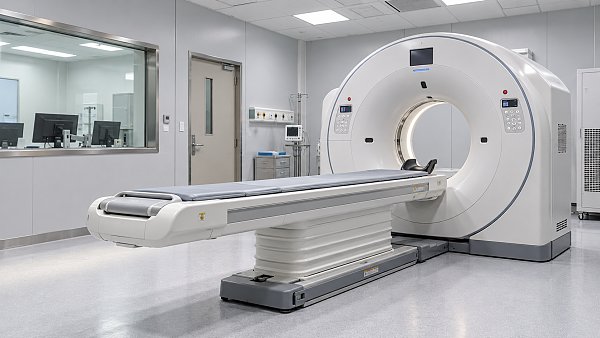
 Technology & Performance BenchmarkMedical Imaging Equipment Explained: What X-Ray, CT, MRI, and Ultrasound ShowMedical Imaging Equipment explained: discover what X-ray, CT, MRI, and ultrasound show, and compare workflow, safety, and lifecycle costs to make smarter purchasing decisions.By:Oct 22, 2026
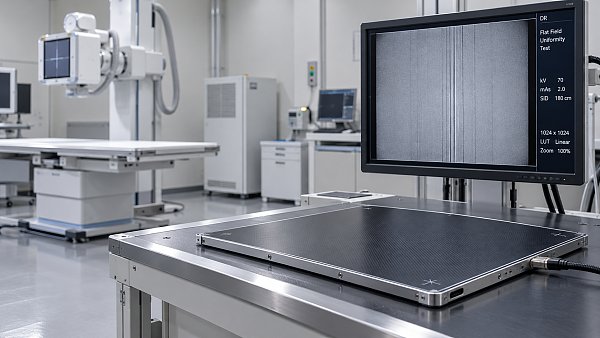
 X-Ray & CTRecurring Artifacts in Digital X-Ray Machines: Detector or Calibration?X-Ray Machines showing recurring lines, bands, or ghosting? Learn how to distinguish detector faults from calibration issues, avoid unnecessary replacement, and verify image quality.By:Oct 22, 2026
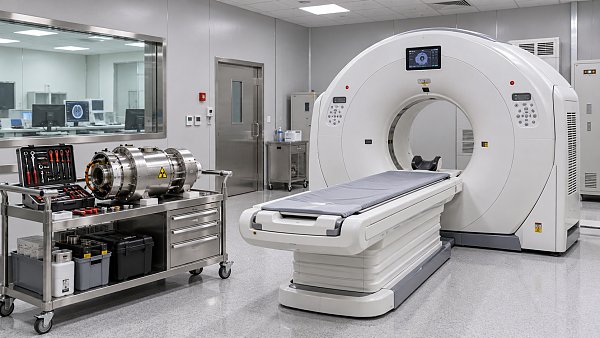
 Market Pricing & CostCT Scanner Ownership Costs: Service, Tube Replacement, and UtilizationCT Scanners cost more than the purchase price. Explore service contracts, tube replacement, and utilization to compare lifecycle costs and make a smarter investment.By:Oct 22, 2026
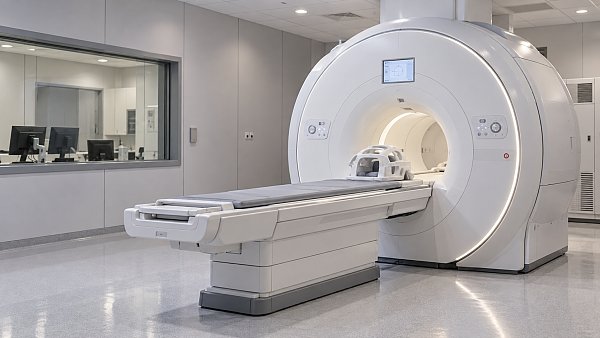
 MRI & Imaging Software1.5T vs. 3T MRI Systems: Which Fits Your Clinical Case Mix?Compare 1.5T and 3T MRI Systems to find the right fit for your clinical case mix. Explore image quality, implant conditions, workflow, and costs to make a smarter investment.By:Oct 22, 2026
 Technology & Performance BenchmarkLaboratory Centrifuges: Why RCF Matters More Than RPM in Sample ProtocolsLaboratory Centrifuges: Learn why RCF matters more than RPM, avoid rotor conversion errors, and discover key checks for consistent sample separation and safer protocol transfers.By:Oct 22, 2026
 Validation & TraceabilityAutoclave Validation: What Biological and Chemical Indicators Can ProveAutoclaves need more than passing indicators. Learn what biological and chemical tests prove, avoid release errors, and strengthen your validation process.By:Oct 22, 2026
 Portable UltrasoundPortable Ultrasound Machines for Bedside Care: Choosing Probes and FeaturesCompare portable Ultrasound Machines for bedside care. Explore probe options, image quality, battery life, and connectivity to choose a system that fits your clinical workflow.By:Oct 22, 2026
 Supply Chain & ProcurementDental Equipment for a New Clinic: What to Buy First and What Can WaitDental Equipment for a new clinic: discover what to buy first, what can wait, and how to compare suppliers. Plan a safe opening, control costs, and invest confidently as demand grows.By:Oct 22, 2026
 Dental Treatment UnitsPlanning Dental Treatment Units: Space, Utilities, and Installation NeedsPlanning Dental Treatment Units? Discover essential space, utility, and installation requirements to avoid costly rework, streamline setup, and keep your dental practice running smoothly.By:Oct 22, 2026
 Automated ChemistryChoosing Biochemistry Analyzers: Match Throughput and Test Menus to Lab DemandChoosing Biochemistry Analyzers? Learn how to match throughput, test menus, and operating costs to lab demand—and compare systems confidently beyond headline specifications.By:Oct 22, 2026




Device Topic
Equipment Selection Guide
Reference Article • Technical Topic • Life Cycle Cost
Newsletter Digest
Browse equipment comparisons and practical reading on imaging, laboratory systems and procurement. Newsletter delivery is not connected.
Leave A Message
If you are interested in our products and want to know more details, please leave a message here, we will reply you as soon as we can.